Explore the frontier
Filter every story, video, company, game and lab experiment by topic, disease area, technology, company, development stage, format and audience.
15 results · 1 filter activeClear all

What if we could print living tissue that functions inside the body?
Printing shapes is easy. Printing tissue that lives, breathes and connects is not.

What if an MRI scan took a fraction of the time?
Shorter scans could mean less time lying still in a loud tube — and more people scanned per day.
 Play + Learn
 DeepTech + MedTech
Organoids & organs-on-chips
Miniature, simplified human tissues grown in the lab to test biology and drugs.
 DeepTech + MedTech
3D bioprinting
Printing living cells and supportive gels layer by layer into tissue-like structures.

How does an MRI machine work?
A plain-language look at the physics behind magnetic resonance imaging, from powerful magnets to radio pulses and hydrogen atoms in the body. Viewers come…
How to 3D print human tissue – Taneka Jones
Shows how bioprinters build living tissue layer by layer using cell-laden 'bio-inks'. Viewers learn what has been achieved so far and the obstacles, such…

Hans Clevers (Hubrecht I., UU) 3: Organoid Technology for Disease Modeling
Organoid pioneer Hans Clevers explains how adult stem cells can be grown into miniature organ-like structures in the lab. He describes how these organoids…
 DeepTech + MedTech
da Vinci 5 surgical system — cardiac indications
FDA 510(k) clearance for certain cardiac procedures announced Jan. 26, 2026 (company release).
Intuitive Surgical
Nasdaq: ISRGIntuitive makes the da Vinci robotic-assisted surgical systems used in minimally invasive procedures. Its fifth-generation platform, da Vinci 5, adds force-sensing instruments…
Hyperfine
Nasdaq: HYPRHyperfine makes the Swoop system, a portable, ultra-low-field MRI scanner for brain imaging at the point of care. The company was founded…
 AI + Medicine
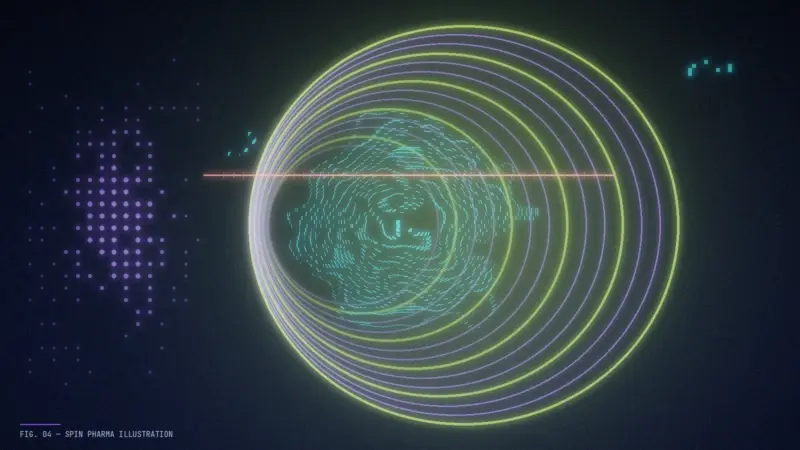
The MRI Reinvention: Faster Scans, Better Images, and the Real Role of AI
AI reconstruction has nearly halved knee MRI scan times in clinical studies without losing diagnostic accuracy. But networks that fill in missing data can also invent or erase detail, so validation must be specific.