Breakthroughs
Significant discoveries, therapy advances and trial results — with every early-stage finding clearly labelled for what it is.
A Drug That Works in Cells Isn’t a Cure: How to Read a Biotech Breakthrough
Most exciting lab results never become medicines. Here is how to tell where a discovery really sits on the long ladder from petri dish to patient.
Latest in Breakthroughs
 Genome + Cells
Gene Editing, Gene Therapy, and RNA Medicines: Three Different Ways to Change an Outcome
In December 2023 the FDA approved Casgevy, the first CRISPR-based therapy, for sickle cell disease. Here is how gene editing, gene therapy and RNA medicines differ, and what that approval does and doesn't prove.
 Breakthroughs
Inside a Clinical Trial: What Phase 1, 2, and 3 Results Really Mean
A positive Phase 1 result and a positive Phase 3 result sound similar but mean very different things. Here is what each stage of a clinical trial is designed to show, and what it cannot.
 Companies + Stocks
The Biotech Startup Map: How Young Companies Move From Discovery to Patients
Many biotech startups spend years building evidence rather than selling products. This map traces the stations most pass through, from licensing a discovery to the forks where companies partner, sell, go public or stop.
 Breakthroughs
The Breakthrough Reality Check: Seven Questions to Ask Before Sharing a Medical Headline
Health headlines often overstate early findings, sometimes before a journalist ever sees them. These seven questions help anyone judge a medical claim in about two minutes before sharing it.
What’s in the pipeline
Selected therapies and technologies at every stage, from preclinical research to approval. Each stage is dated and linked to a primary source.
Stages summarise the most advanced publicly documented status for the named use. “Approved” applies to specific indications and regions only. Nothing here is medical or investment advice.
From The Lab
What if an AI model discovered a promising drug target?
AI can sift biology faster than any lab. Finding a target is the start of the story, not the end.

What if a digital twin helped researchers test treatment strategies?
A computer model of a patient could let researchers ask 'what if?' without the risk. How close are we?
Watch and learn

How do cancer cells behave differently from healthy ones? – George Zaidan
An animated primer on what separates a cancer cell from a normal one, from uncontrolled division to evading the body's usual checks. Viewers also…

Checkpoint Inhibitors: Taking the Brakes Off the Immune System
Explains how tumors exploit immune 'checkpoints' to switch off T cells and how checkpoint-blocking drugs release those brakes. A useful foundation for understanding much…
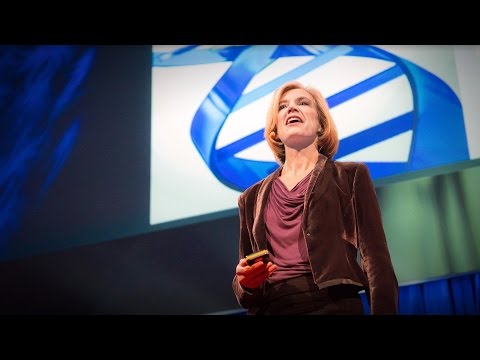
How CRISPR lets us edit our DNA | Jennifer Doudna
CRISPR co-inventor Jennifer Doudna describes how a bacterial immune system became a programmable tool for editing DNA. She also raises the ethical questions that…
Explore other frontiers
The Spin Brief
One concise weekly roundup of what moved in medicine — what happened, what the evidence shows, and what to watch next. No hype, no stock tips.
- Five stories that mattered, each with its own Spin
- One stage change in the pipeline tracker, sourced
- One Lab question to think about
We use double opt-in: check your inbox to confirm. We never sell your address, and we never ask for health or genetic information.