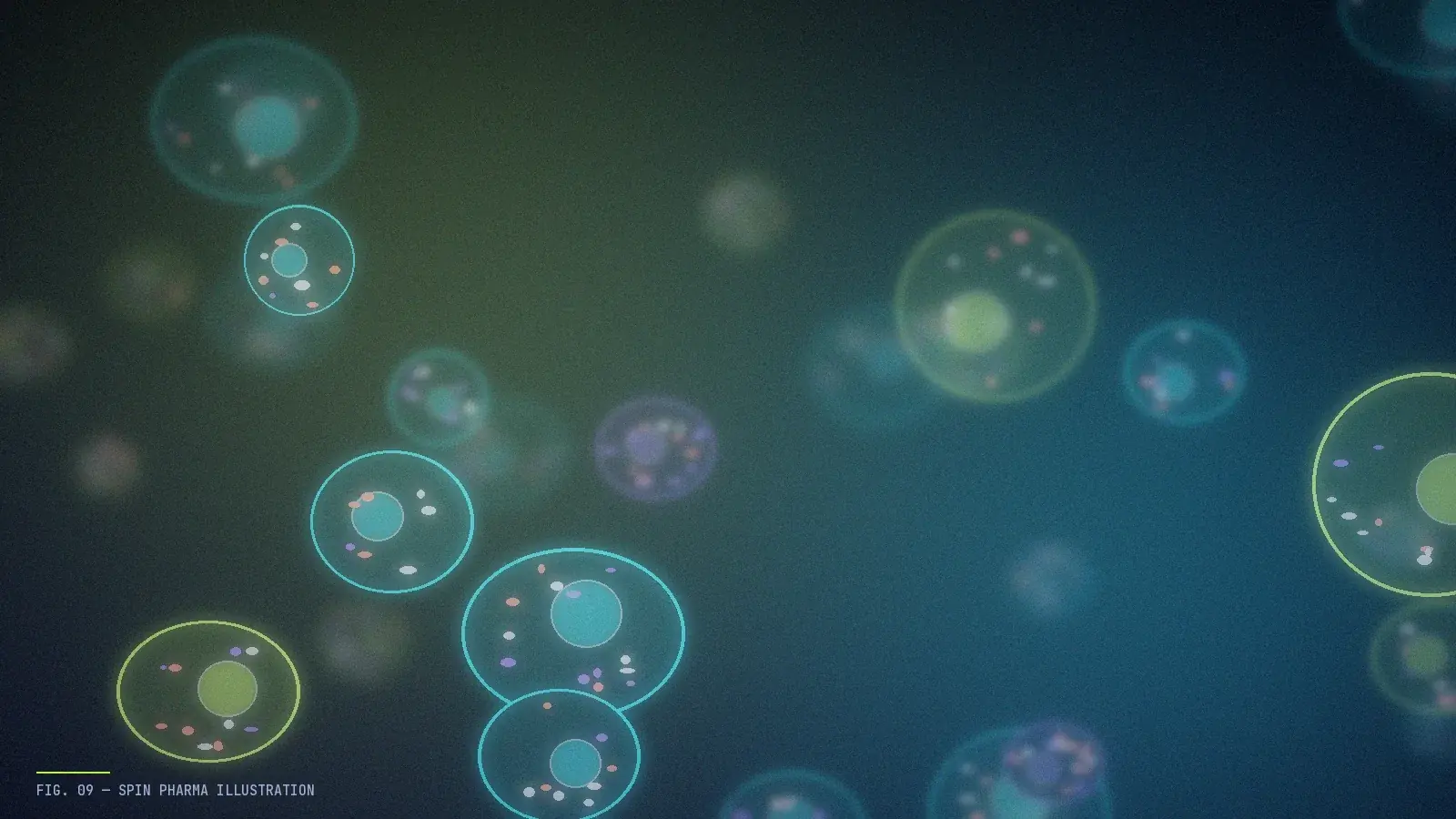
Somewhere in your body right now are cells that have stopped dividing but have not died. They sit in tissues like retirees who refuse to leave the office, and some of them keep sending out chemical signals that irritate their neighbours. Biologists call them senescent cells; headline writers prefer “zombie cells.” Either way, they have become one of the most closely watched targets in the science of ageing—alongside the tiny energy-handling structures inside nearly every cell, the mitochondria.
This is the cell health frontier: the idea that some of the problems of growing older start at the level of individual cells, and that understanding those cellular changes might one day help people stay healthier for longer. It is a genuinely exciting field. It is also one where mouse results routinely outrun human evidence, so it pays to read it carefully.
Healthspan, not immortality
Researchers in this area increasingly talk about healthspan—the years of life spent in good health—rather than lifespan, the total number of years lived. The goal most serious scientists describe is not to stop ageing, but to delay or soften the diseases and frailty that tend to arrive with it: heart disease, many cancers, dementia, weakened bones and muscles.
Nothing is currently approved by the FDA to treat ageing itself. Everything in this article should be read with that in mind.
A map of cellular ageing
In 2023, Carlos López-Otín and colleagues published an influential review in the journal Cell, “Hallmarks of aging: An expanding universe,” that expanded an earlier framework to a dozen interconnected hallmarks of ageing. Among them are damage to DNA, the shortening of chromosome tips called telomeres, changes in how genes are switched on and off, a decline in cells’ ability to maintain their proteins, mitochondrial dysfunction, cellular senescence and chronic inflammation.
A framework like this is a map, not a treatment plan. It helps scientists organise what they see, and it suggests where to look for interventions. But a hallmark being linked to ageing does not automatically mean that targeting it in people will make them healthier. That is an experimental question, and it has to be answered one trial at a time.
Plain English: A senescent cell is a cell that has permanently stopped dividing but stays alive. A senolytic is a drug designed to selectively kill such cells.
Senescence: the cell that won’t retire
Senescence is not a mistake. The National Institute on Aging (NIA) notes that senescent cells play useful roles: they help with wound healing, they act as a brake on cells that might otherwise grow into tumours, and they contribute to normal development before birth. The trouble seems to come when they accumulate—as the immune system becomes less efficient at clearing them with age—and when they release a cocktail of inflammatory molecules that can harm nearby tissue.
The idea that clearing these cells could matter got a major push in 2011, when a team led by Darren Baker at the Mayo Clinic reported in Nature that eliminating senescent cells in genetically engineered, fast-ageing mice delayed age-related changes in tissues including fat, skeletal muscle and the eye. That was preclinical evidence in a special mouse model—important, but a long way from a human therapy.
Senescent cells also turn out to be more varied than first thought. In June 2026, the NIH described work from its Cellular Senescence Network (SenNet) proposing “senotypes”—a way of classifying senescent cells according to the tissue they live in and their surrounding conditions—and noted that the aim is to develop therapies that target harmful senescent cells while preserving beneficial ones.
The question was never just “can we clear old cells?” It is “which ones, in whom, and at what cost to the jobs they still do?”
Senolytics meet human biology
Human studies of senolytics are real but early. The most discussed combination is dasatinib, a cancer drug, with quercetin, a plant compound found in many foods.
- A first-in-human pilot (2019). Fourteen people with idiopathic pulmonary fibrosis, a scarring lung disease, took intermittent dasatinib plus quercetin for three weeks. Walking distance, gait speed and chair-stand times improved, but standard measures of lung function did not change. Crucially, there was no placebo group, and the authors themselves cautioned that the improvements must be interpreted with caution.
- A Phase 2 randomised trial in bone (2024). Researchers tested the same combination in 60 postmenopausal women aged 62 to 88. According to the NIA, there was no meaningful difference between treatment and control groups on the trial’s main measure of bone breakdown. A marker of bone formation rose early on, but the advantage had disappeared by week 20.
The NIA has also stressed that these findings should not prompt self-treatment outside clinical trials. Senolytic drugs can have real side effects, and some, like dasatinib, are potent medicines with approved uses in cancer—not wellness supplements. If you want a framework for judging these results, our guide on how to read a biotech breakthrough walks through why small, uncontrolled studies are a starting point rather than an answer.
Mitochondria: more than batteries
School biology calls mitochondria the powerhouses of the cell, and that is fair: the NIH notes they generate about 90% of the energy cells need. But they also help regulate nerve activity, trigger the removal of damaged cells and send chemical signals that influence the rest of the body. They even carry their own small, circular genome, separate from the DNA in the nucleus.
That mitochondrial DNA can accumulate damage. In one NIA-supported study analysing mitochondrial DNA from blood cells of about 2,700 participants in two long-running Italian ageing studies, researchers found that mutations tended to cluster near unusual four-stranded DNA structures that can trip up the enzymes copying the DNA. It is a clue about how damage arises—not yet a treatment.
Mitochondrial problems are also being studied in specific diseases. The NIH has highlighted research on a test for mitochondrial DNA damage that found higher levels in people with Parkinson’s disease than in healthy volunteers—a research tool at this stage, not a diagnostic you can order. Supplements that claim to “recharge your mitochondria,” including NAD+ boosters, are a separate matter; we weigh that evidence in our field guide, Can We Slow Aging?
Where the evidence stands
- Preclinical (cells and animals): Strong evidence that senescent cells and mitochondrial changes contribute to age-related decline in laboratory models.
- Clinical (people): Small pilot studies and a handful of randomised trials of senolytics, with mixed and modest results so far.
- Approved: No therapy is approved to treat ageing, senescence or mitochondrial ageing as such.
What to watch next
The next few years should bring better maps of which senescent cells matter in which tissues, more randomised trials with meaningful endpoints, and better ways to measure whether an intervention changes biological ageing at all—a challenge we explore in The Longevity Dashboard. Curious how all these parts fit inside a single cell? Try building one in our Build a Cell game.
The frontier is real. So is the distance between a mouse that ages more gracefully and a medicine that helps people do the same.
Key terms in plain English
- Healthspan
- The period of life spent in good health, as opposed to total lifespan.
- Senescent cell
- A cell that has permanently stopped dividing but remains alive and can release inflammatory signals.
- Senolytic
- A drug designed to selectively kill senescent cells.
- Mitochondria
- Structures inside cells that produce most of their usable energy and carry their own small genome.
- Hallmarks of aging
- A scientific framework listing interconnected biological processes thought to drive ageing.
Sources primary research, registries & regulators first
- Hallmarks of aging: An expanding universe (López-Otín et al., Cell, 2023)IRB Barcelona (publication record) · Review · irbbarcelona.org
- Clearance of p16Ink4a-positive senescent cells delays ageing-associated disorders (Baker et al., 2011)Nature · Primary research · nature.com
- Does cellular senescence hold secrets for healthier aging?National Institute on Aging · Institutional · nia.nih.gov
- NIH research establishes new framework for the role of senescence in agingNational Institutes of Health · Institutional · nih.gov
- Senolytics in idiopathic pulmonary fibrosis: Results from a first-in-human, open-label, pilot study (Justice et al., 2019)EBioMedicine · Primary research · sciencedirect.com
- Senolytic therapy shows subtle impact on age-related bone health in womenNational Institute on Aging · Institutional · nia.nih.gov
- Mitochondria and healthNational Institutes of Health (NIH Research Matters) · Institutional · nih.gov
- Mutations in complex mitochondrial DNA sequences may impact age-related conditions and genetic disordersNational Institute on Aging · Institutional · nia.nih.gov
Links checked on September 25, 2026. Company statements are labelled as such.
Conflicts of interest. Spin Pharma has no financial relationship with companies mentioned in this article.
Not medical or investment advice. This article is general education. It cannot diagnose or recommend treatment for anyone, and company mentions are not recommendations to buy or sell securities. How we report and review.