The short version: Not yet — and not by itself. But AI is already changing how scientists read and edit DNA, and a first personalized gene-editing therapy has treated a child with a rare disease. As of mid-2026, no AI-discovered drug has won full FDA approval. The realistic near-term payoff is faster, cheaper, more precise tools for treating genetic disease — not a universal cure.
This article is educational and not medical advice.
The 30-second version
- AI is genuinely great at reading DNA now — it can predict what a single-letter change in your genome actually does.
- CRISPR gene editing already has one approved therapy (Casgevy, for sickle cell disease, cleared in late 2023).
- AI is now being used to design better CRISPR tools — more precise, fewer mistakes.
- A baby with a rare disorder received the first fully personalized gene-editing therapy, built just for him.
- No AI-discovered drug has full FDA approval yet (as of mid-2026). Biology moves slower than software — every idea still has to be tested in cells, animals, and people, and that takes years.
- The most realistic near-term wins: rare single-gene diseases, better diagnostics, and faster early-stage drug discovery.
Has AI really solved everything?
You’ve probably seen the headlines. AI won a share of the 2024 Nobel Prize in Chemistry for predicting protein structures. It writes code, generates images, and has reached medal-level performance on competition math problems.
Here’s the thing those wins have in common: the answer can be checked quickly on a computer. A math proof is either right or wrong. A predicted protein shape can be verified against a scan.
Biology breaks that pattern. A model can propose a thousand new DNA edits in an afternoon — but each one still has to be tested in living cells, then animals, then people. Clinical trials take years. Nature does not run at GPU speed.
That’s why AI’s biggest impact on medicine is arriving as acceleration at the early stages — reading DNA faster, designing better tools, finding promising drug candidates sooner — not as finished cures dropping from the sky.
Think of it this way: AI just became the world’s fastest research assistant. It still needs the lab, the trials, and the time.
Your DNA, explained simply
Your DNA is an instruction manual written in a four-letter alphabet (A, C, G, T), about 3 billion letters long. Here’s the surprising part: only about 1–2% of it directly codes for proteins — the building blocks your body is made of.
The other 98%? It’s not junk. Much of it acts like switches and dimmer dials that decide when and where each gene turns on. And honestly, scientists are still figuring out what a lot of it does.
Two things made DNA a perfect target for AI:
- Data, lots of it. Sequencing a full genome cost tens of millions of dollars around 2001. Today it’s roughly a thousand dollars or less. That price collapse created a flood of genetic data.
- Structure. DNA is a language-like sequence — and modern AI models are, at heart, language learners. Feed them enough DNA and they start to “understand” it the way they understand English.
The result: AI models can now predict what a single-letter change in DNA will do — something that used to require a full lab experiment. That’s the first step toward knowing which edits are worth making.
AI reads the genome: where things stand
Two models show how far this has come. Don’t worry about the technical names — what matters is what they can do.
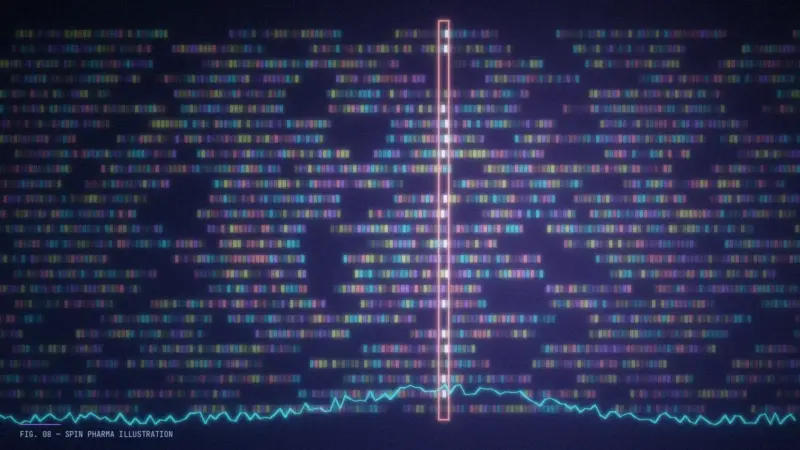
AlphaGenome (Google DeepMind). Imagine a proofreader that can read up to one million DNA letters at a time and spot how a tiny change in the “switches” region affects which genes turn on — including the effect of a single-letter typo. Scientists have used it to tell cancer-driving mutations apart from harmless ones. By early 2026, about 3,000 scientists were using it, according to eWeek.
It’s not perfect: it struggles with switches that act over very long distances (more than 100,000 letters apart) and its accuracy varies between tissue types. A proofreader who’s brilliant with novels but shaky with poetry.
Evo 2 (Arc Institute). Described in a 2026 Nature paper (summarized by News-Medical), this one was trained on about 9 trillion DNA letters from bacteria, archaea, eukaryotes, and bacteriophages — with up to 40 billion parameters and a context window of up to a million nucleotides. It can estimate the effects of genetic variants without special training for each task, and a classifier built on it scored 0.95 (out of 1.0) at judging BRCA1 variants — the breast-cancer-risk gene many people have heard of.
It can even generate genome-scale DNA sequences — though those don’t necessarily represent working genomes, and its designs leaned on outside models. Notably, the code, parameters, and dataset are open source, and viruses that infect eukaryotic hosts were deliberately left out of training for biosafety reasons.
The takeaway: AI can now interpret DNA variants at scale. Reading comes before editing — you have to know which typo to fix.
CRISPR: the world’s tiniest word processor
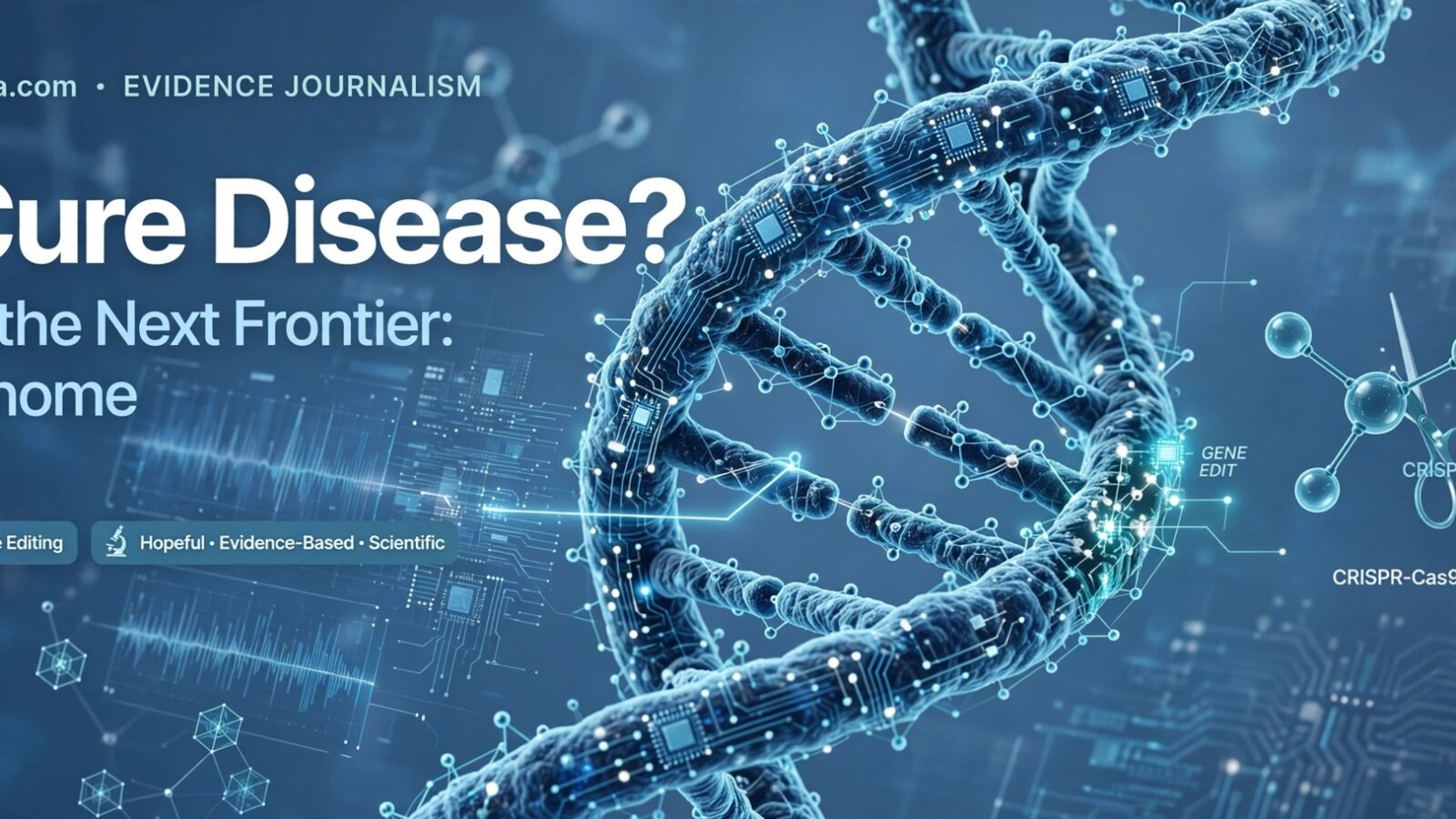
If DNA is the instruction manual, CRISPR is find-and-replace. It lets scientists cut DNA at a precise spot and rewrite it.
This isn’t theoretical anymore. Casgevy, a CRISPR therapy for sickle cell disease, was cleared in late 2023 — the first approved CRISPR therapy. The era of gene editing as real medicine has already begun.
The new frontier: using AI to make the editing tools themselves better. Three advances worth knowing:
Fewer mistakes. CRISPR sometimes edits the wrong spot (“off-target” edits) — like autocorrect changing the wrong word. A Chinese team used AlphaFold 3 and their own ContactSeek tool to find the parts of CRISPR proteins linked to these mistakes. With just two changes, they improved an A-to-G base editor in human kidney cells so it outperformed several existing high-precision editors, per SingularityHub.
Brand-new editors, designed from scratch. Jennifer Doudna’s team (she co-invented CRISPR) published in Science on using AI to redesign compact Cas12-related proteins — about 30% different from anything in nature. They successfully edited genes in bacterial, plant, and human cells, and some designs beat their natural counterparts.
The honest caveat. Neither approach has been tested in a living person yet. Lab dishes are not bodies — the designs still need to dodge immune reactions and edit enough cells to actually treat disease. Promising, not proven.
The story that proves it’s real: Baby KJ
This is where it stops being abstract.
Kyle “KJ” Muldoon Jr. was born with an ultra-rare disorder that stops his body from clearing toxic ammonia — essentially, his blood was slowly poisoning him. There was no standard treatment.
A University of Pennsylvania team did something unprecedented: they built a base-editing therapy just for him. One patient. One custom drug. They tested it in human cells, then mice, then monkeys — and dosed KJ at seven months old.
By October 2025, his parents reported he was meeting developmental milestones. Doctors caution it’s still too early to judge how well it works long-term. But a child who had no options is developing.
The numbers behind it, per MIT Technology Review:
- The treatment cost about as much as a liver transplant — around $1 million.
- Researchers hope costs fall to a few hundred thousand dollars within years.
- The FDA has agreed to a trial protocol that could involve as few as five patients — a brand-new regulatory path for personalized therapies.
- The article estimates personalized therapies like his could be approved within 3 to 5 years.
If that timeline holds, Baby KJ isn’t a one-off miracle. He’s patient zero of a platform — where each new patient gets cheaper and faster to treat because the process is reusable, even though the drug is personal.
So… will AI cure disease? The honest answer
It depends on the disease. Here’s the breakdown:
| Area | Where things stand (2026) | Realistic outlook |
|---|---|---|
| Rare single-gene diseases | First personalized base-editing therapy given to one child; FDA-agreed trial design for small groups | Most promising near-term; first approvals possible within a few years |
| AI-discovered drugs | 117 AI-enabled assets in trials as of Dec 2025; 8 had finished Phase 2; no full FDA approval yet | Faster early discovery; late-stage success still unproven |
| Common complex diseases (heart disease, diabetes, dementia) | AI helps interpret risk variants and find targets | Better prevention and targeting; cures are not close — these involve many genes plus lifestyle |
| Cancer | AI can separate driver mutations from incidental ones | Better diagnostics and tailored treatment, not a single cure |
On drug discovery specifically: a 2024 analysis estimated Phase 1 success for AI-discovered molecules at 80–90%, but Phase 2 success around 40% — similar to historical rates, per IntuitionLabs’ 2026 review. Translation: AI gets drug candidates into human trials faster, but it doesn’t yet change whether they actually work in people.
One bright spot: Insilico’s AI-designed lung-fibrosis drug rentosertib showed a lung-function gain in a 71-patient Phase 2a trial and moved into Phase 3, with the first patient dosed on September 9, 2026. That’s the one to watch — it’s the closest an AI-designed drug has come to the finish line.
What this could mean for you and your family
Strip away the jargon and here’s what’s actually exciting:
- Hope for rare diseases. There are thousands of rare genetic conditions, most with no treatment at all. If personalized editing becomes a repeatable platform — the Baby KJ model — each new patient gets cheaper to treat.
- Answers from your DNA test. Labs routinely find DNA changes of “unknown significance” — typos nobody can interpret. Models like AlphaGenome and Evo 2 can help sort the harmful from the harmless, turning anxiety into information.
- Safer editing. AI-guided redesign could cut down off-target edits — one of the biggest safety worries about gene editing.
- Better drug targets. Understanding the “switches and dials” of DNA opens new points of attack for common diseases, even if cures are far off.
- Prevention over treatment. Knowing your genetic risk earlier shifts medicine from “treat it when it breaks” to screening, monitoring, and lifestyle changes while you’re still healthy.
- Beyond medicine. The same tools apply to engineered enzymes, crops, and microbes — earlier-stage, but the same science.
The fine print: risks, honestly
No honest article skips this part.
- Safety. Off-target edits, immune reactions, and long-term effects aren’t fully understood — and many AI-designed editors have only been tested in cells, not people.
- Cost and access. A $1 million personalized therapy helps few families unless costs fall sharply. The science can’t outrun the economics.
- Data and bias. AI models are only as good as their training data, and the non-coding 98% of DNA is still hard to interpret. Gaps in the data become gaps in care.
- Privacy. Your genetic data is permanent — and it’s shared with your relatives whether they consented or not. Who owns it and who can use it are still unsettled questions.
- Biosecurity. Tools that can design genomes raise misuse concerns. That’s exactly why Evo 2’s developers excluded certain viruses from training.
- Hype. “AI-discovered” has no regulatory definition, and many speed and cost claims come from companies describing their own work — unaudited. Healthy skepticism is warranted.
What to watch next
Five milestones that will tell us whether the promise is real:
- Rentosertib Phase 3 — the test of whether an AI-designed drug can clear the final regulatory hurdle.
- The FDA pathway for personalized gene editing — and the first small multi-patient trial modeled on Baby KJ.
- First in-body tests of AI-designed editors — the step that separates lab promise from actual medicine.
- Isomorphic Labs’ first clinical trials, which its CEO expects by the end of 2026.
- Better long-range gene regulation models — the main gap in tools like AlphaGenome.
Glossary: the jargon, translated
- Base editing — A gentler form of CRISPR that rewrites a single DNA letter without cutting the whole strand. Think “edit” instead of “cut and paste.”
- Off-target edit — When CRISPR changes DNA somewhere it wasn’t supposed to. The typo in the fix.
- Bystander edit — When nearby letters get changed along with the target. Collateral damage at the molecular level.
- Phase 1 / 2 / 3 trials — Phase 1: is it safe in a small group? Phase 2: does it seem to work in a larger group? Phase 3: prove it works in a large group. Each phase takes years.
- FDA approval — The US regulator’s full green light. Nothing counts until this happens.
- Single-gene disorder — A disease caused by one misspelled gene (like KJ’s condition, or sickle cell). The easiest target for gene editing.
- Variant of unknown significance — A DNA typo your test found but nobody can interpret yet. AI is getting good at resolving these.
- AUROC 0.95 — A score for how well a model distinguishes harmful variants from harmless ones. 1.0 is perfect; 0.95 is excellent.
Sources
- Scientists Are Designing CRISPR Gene Editors With AI, SingularityHub, July 24, 2026
- Baby KJ and personalized gene editing, MIT Technology Review, January 12, 2026
- AI trained on 9 trillion DNA letters (Evo 2), News-Medical, March 5, 2026
- Google DeepMind AI Model Reads DNA’s Recipe for Life (AlphaGenome), eWeek, January 29, 2026
- AI-Discovered Drugs in Clinical Trials, 2026, IntuitionLabs
Statements on the 2024 Chemistry Nobel, Casgevy’s 2023 approval, genome size, and sequencing cost are from general knowledge and were not re-checked here. This article is educational and not medical advice.
Conflicts of interest. None declared.
Not medical or investment advice. This article is general education. It cannot diagnose or recommend treatment for anyone, and company mentions are not recommendations to buy or sell securities. How we report and review.