What if an AI model discovered a promising drug target?
Before a drug can be designed, scientists need a target: usually a protein whose activity drives a disease. AI models are now being used to suggest new targets from vast piles of biological data. The question is what 'discovered' really means — and how much of the hard work remains.
⚠ This is a thought experiment. It explores a possibility; it does not report a result.
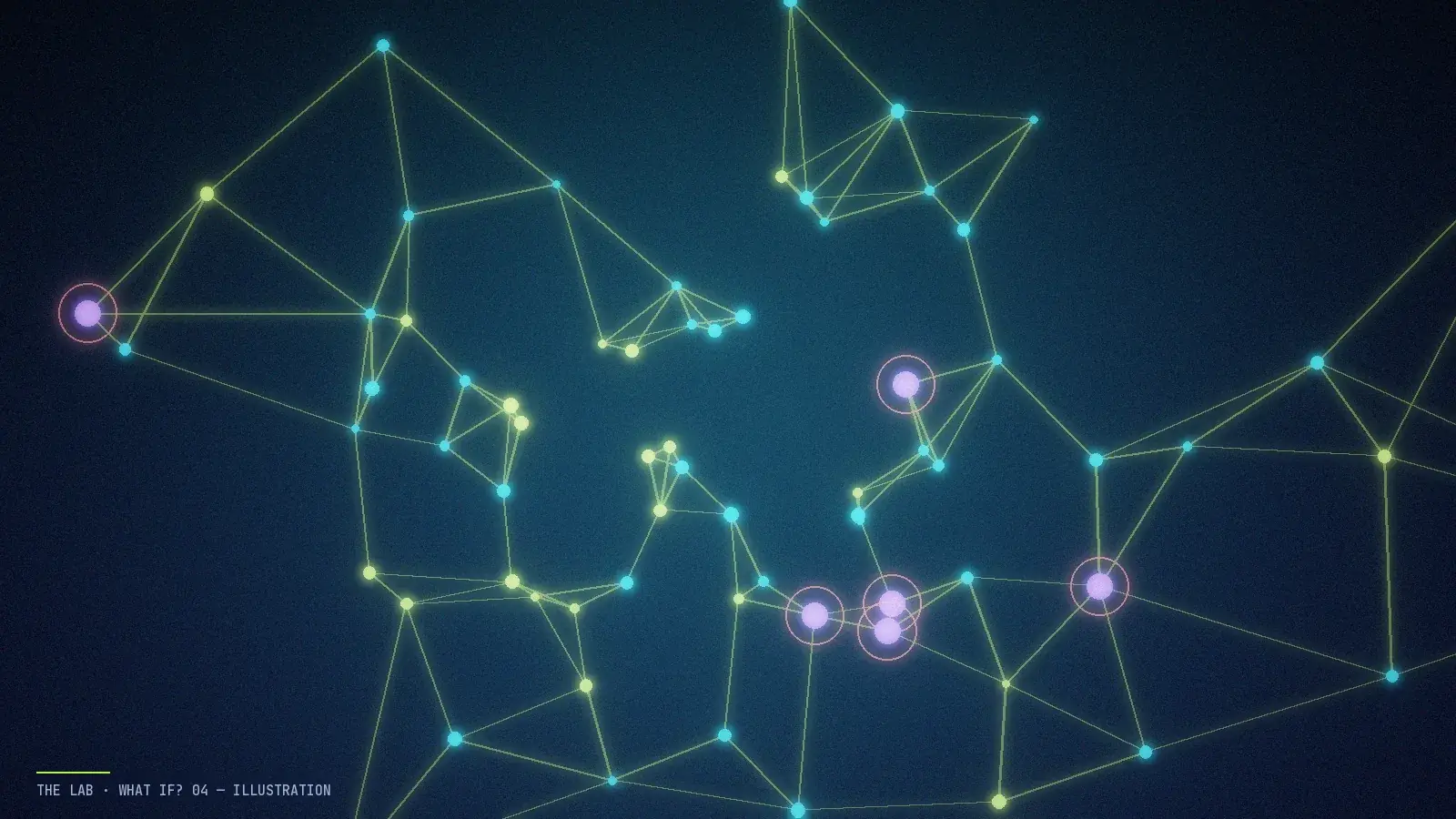
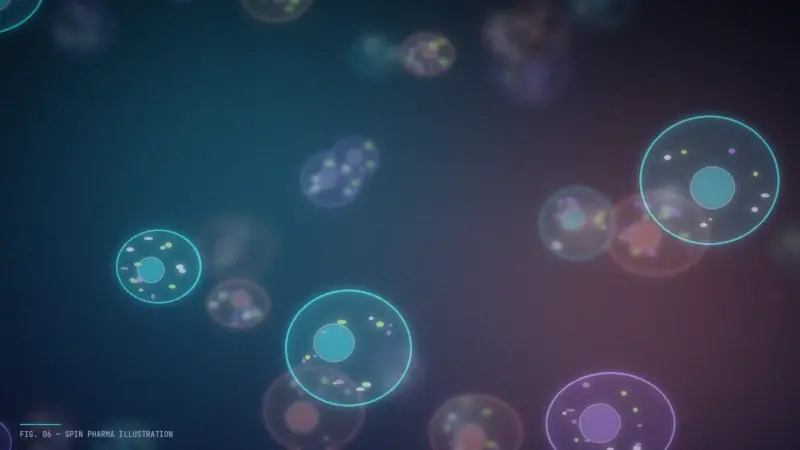
Original illustration — speculative and artistic, not a depiction of a real device, patient or result.
What exists today
AI and machine learning are already used across early drug research. Models analyse genetic, protein and clinical data to suggest which molecules might be linked to a disease, predict how proteins fold, and screen huge virtual libraries of compounds. Protein structure prediction took a big step forward with AlphaFold, and the 2024 Nobel Prize in Chemistry recognised work on computational protein design and structure prediction. Several companies describe their pipelines as AI-driven, and the FDA has published material on how AI is being used in drug development. But every AI-suggested target still has to be tested in lab experiments, animals and people.
What has been demonstrated
AI tools have shown they can predict many protein structures with accuracy that is often close to experimental methods, which helps chemists design molecules to fit them. Machine-learning approaches have helped prioritise candidate targets and compounds, and some drug candidates whose targets or designs were proposed with AI assistance have entered clinical trials. At least one such candidate, aimed at a lung-scarring disease, has reported early Phase 2 results. What has not yet been clearly demonstrated is that AI-led programmes succeed in late-stage trials at higher rates than traditional ones. That comparison needs more years of data and more completed trials.
What remains difficult
A statistical link between a protein and a disease does not prove that blocking the protein will help. Biology is full of backup systems, feedback loops and differences between cells, tissues and people. AI models learn from existing data, which can be biased toward well-studied genes and certain populations, and published results can be hard to reproduce. Predicted protein structures may miss how proteins move or interact inside living cells. Even a validated target might be 'undruggable' with current chemistry, or blocking it might cause side effects. Most drug candidates fail in clinical trials, and AI does not remove the need to test safety and efficacy.
What would change if it worked
If AI reliably found good targets, drug discovery might become faster and less wasteful, with fewer years spent chasing dead ends. Diseases that have attracted little research investment, including some rare conditions, might gain candidate targets more cheaply. Scientists could test many hypotheses in silico before committing to expensive experiments. It could also shift where expertise sits, making data quality and careful experimental validation even more valuable. But a faster start does not guarantee a faster finish: clinical trials, manufacturing and regulatory review would still take substantial time, and their costs would not automatically fall.
What evidence would convince us
Convincing evidence would be a track record rather than a single success story. You would want to see AI-proposed targets validated in independent labs, drug candidates against those targets succeeding in randomised clinical trials, and ideally a fair comparison showing higher success rates or shorter timelines than conventional programmes with similar goals. Transparent reporting of failures as well as wins would matter, because it is easy to highlight the hits and forget the misses. Clear descriptions of what the AI actually contributed, versus the human scientists and traditional experiments, would help readers judge whether 'AI-discovered' is a meaningful label or mostly marketing.
When a company says a drug was 'discovered by AI', what would you most want to know?
Polls measure reader opinion for fun and discussion. They are not scientific evidence.
Should an AI-suggested drug target be judged differently from one found by traditional research — or should the evidence bar be exactly the same?
Try it hands-on:
Play Drug Development Journey →Related reporting
 AI + Medicine
AI Drug Discovery: What Happens Between a Promising Molecule and a Medicine?
AI now helps find drug targets, predict protein shapes and design molecules. But most drugs fail in clinical trials because they don't work well enough or are too toxic, and AI hasn't yet shown it can change that.
 Breakthroughs
A Drug That Works in Cells Isn’t a Cure: How to Read a Biotech Breakthrough
Killing diseased cells in a dish is the easy part of drug development. This guide explains the evidence ladder, why most candidates fail, and seven questions to ask before believing a breakthrough headline.
 Breakthroughs
Inside a Clinical Trial: What Phase 1, 2, and 3 Results Really Mean
A positive Phase 1 result and a positive Phase 3 result sound similar but mean very different things. Here is what each stage of a clinical trial is designed to show, and what it cannot.