What if an MRI scan took a fraction of the time?
An MRI scan can mean lying still in a humming tunnel for a long stretch while the machine patiently collects signal. Engineers and AI researchers are asking how much of that data we actually need. The answer could change who gets scanned, how often, and how comfortably.
⚠ This is a thought experiment. It explores a possibility; it does not report a result.
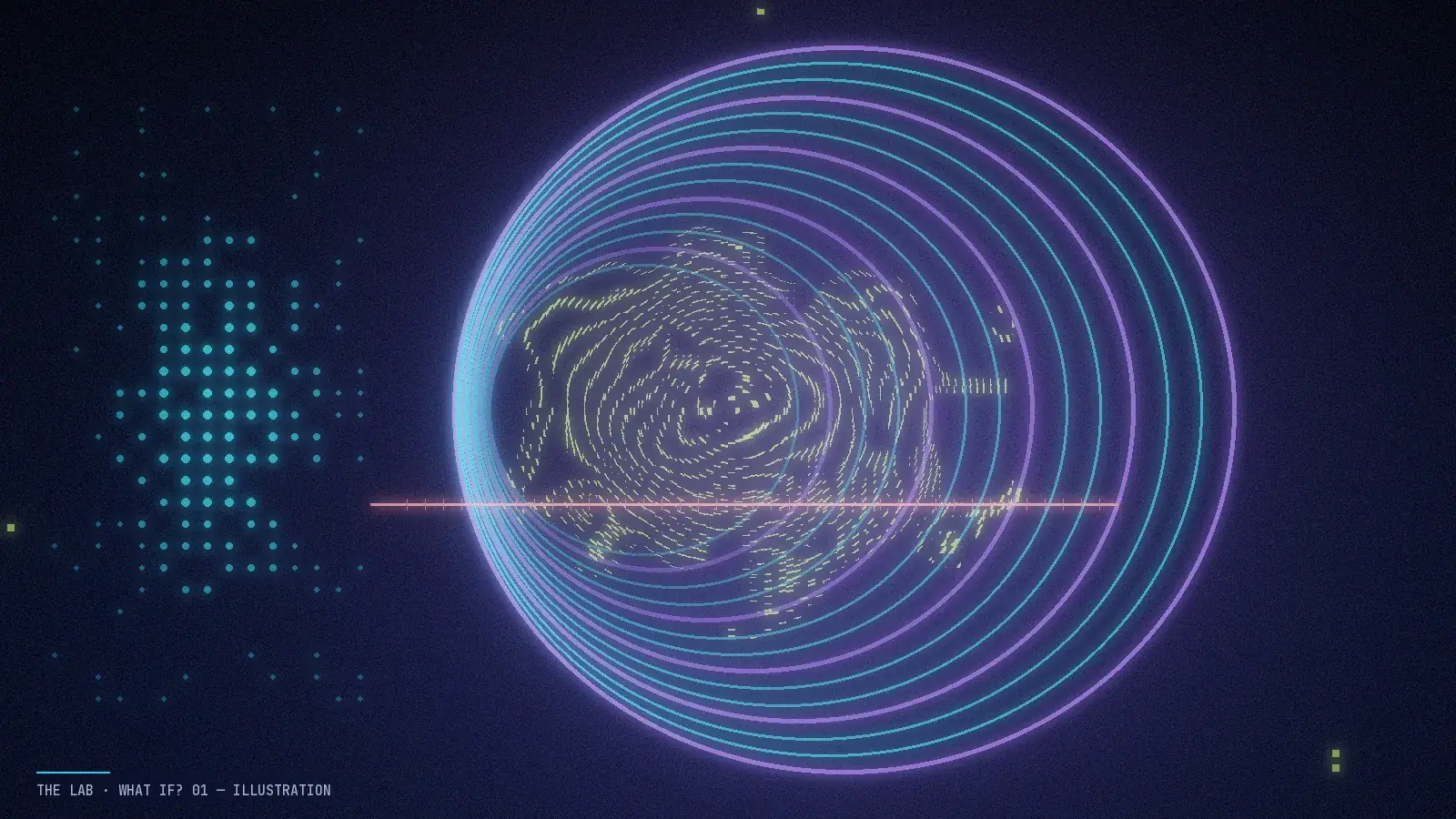
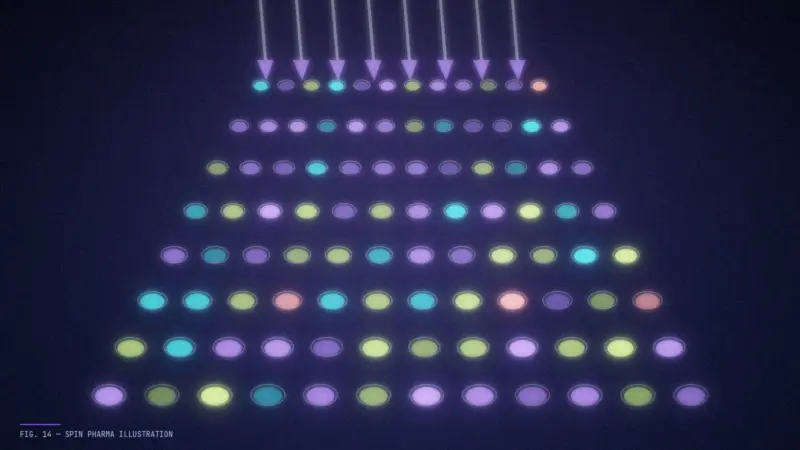
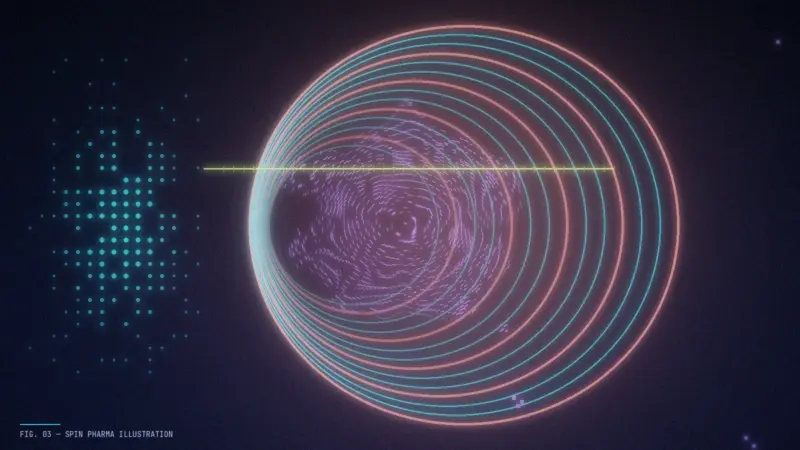
Original illustration — speculative and artistic, not a depiction of a real device, patient or result.
What exists today
MRI builds pictures by collecting raw measurements, one slice of information at a time, and then mathematically turning them into images. Collecting more measurements usually means clearer images but longer scans. Hospitals already use established speed-up methods such as parallel imaging, which uses several receiver coils at once, and compressed sensing, which reconstructs images from deliberately incomplete data. Several MRI reconstruction tools that use deep learning have also been cleared by the FDA, and major scanner makers now offer them. In practice, how much faster a scan gets depends on the body part, the scanner, the sequence and how much image noise radiologists are willing to accept.
What has been demonstrated
Researchers have shown that neural networks trained on large collections of raw MRI data can reconstruct useful images from far fewer measurements than a standard scan collects. Open datasets such as fastMRI, released by NYU and Facebook AI Research in 2018, gave teams a shared benchmark to compare methods fairly. Reader studies, including work on knee imaging, have reported that radiologists judged some AI-accelerated images to be diagnostically comparable to conventional ones for specific tasks. That is a meaningful result, but it is narrower than it sounds: comparable for a defined question, on a defined scanner setup, in the hands of the readers who took part.
What remains difficult
The biggest worry is subtle error. An AI reconstruction can produce images that look crisp and convincing while quietly smoothing away a small lesion or inventing a texture that was never there. These so-called hallucinations are hard to spot precisely because the image looks clean. Models trained on one scanner, field strength or patient population may behave differently elsewhere. Rare findings are, by definition, rare in training data. Speeding up scanning also does not remove other bottlenecks, such as patient preparation, safety screening for metal implants, contrast injection and the time radiologists need to read the images. Faster acquisition is only one link in a longer chain.
What would change if it worked
If scans reliably took a fraction of the time, the experience could become easier for people who find long scans hard: children, people in pain, people with claustrophobia or anyone who struggles to stay still. Fewer motion-blurred images could mean fewer repeat scans. Busy departments might fit in more patients, which could shorten waiting lists, although that depends on staffing and funding as much as technology. Quicker, cheaper protocols could also make MRI more attractive for uses where it is currently too slow or expensive, such as some kinds of follow-up monitoring. None of that is automatic; it would need health systems to reorganise around the faster scans.
What evidence would convince us
The strongest evidence would come from prospective studies in ordinary clinical settings, not just curated research datasets. Ideally, radiologists would read accelerated and standard scans blinded to which was which, across many hospitals, scanner brands and patient groups, including people with rare or subtle disease. Researchers would report not just image quality scores but diagnostic accuracy for real clinical questions: were lesions missed, were false alarms raised, did management change? Independent validation by groups with no commercial stake would help. Longer-term, you would want to see whether faster scanning actually improved access or outcomes, rather than simply making a single scan look impressive in a demo.
If an AI-accelerated MRI were offered to you, what would matter most in deciding whether to accept it?
Polls measure reader opinion for fun and discussion. They are not scientific evidence.
If a faster scan is almost as accurate as a slower one, who should decide how much 'almost' is acceptable — and for which patients?
Try it hands-on:
Play MRI Explorer →Related reporting
 AI + Medicine
The MRI Reinvention: Faster Scans, Better Images, and the Real Role of AI
AI reconstruction has nearly halved knee MRI scan times in clinical studies without losing diagnostic accuracy. But networks that fill in missing data can also invent or erase detail, so validation must be specific.
 DeepTech + MedTech
The Next Medical Device Wave: Sensors, Robotics, Imaging, and Intelligent Software
From over-the-counter glucose monitors to AI-enabled imaging software, medical devices are getting smaller, smarter and more autonomous. Here is what is authorized, what is still experimental, and what could slow things down.
 AI + Medicine
Can AI Spot Cancer Earlier? Where Imaging Helps and Where False Alarms Matter
In breast screening, AI support has been tested in a randomized trial of more than 100,000 women and a real-world study of 460,000. The results are promising, but false alarms, overdiagnosis and deskilling still matter.
Sources
- Magnetic Resonance Imaging (MRI) — NIBIBnibib.nih.gov